Boat on the sea
Published on:

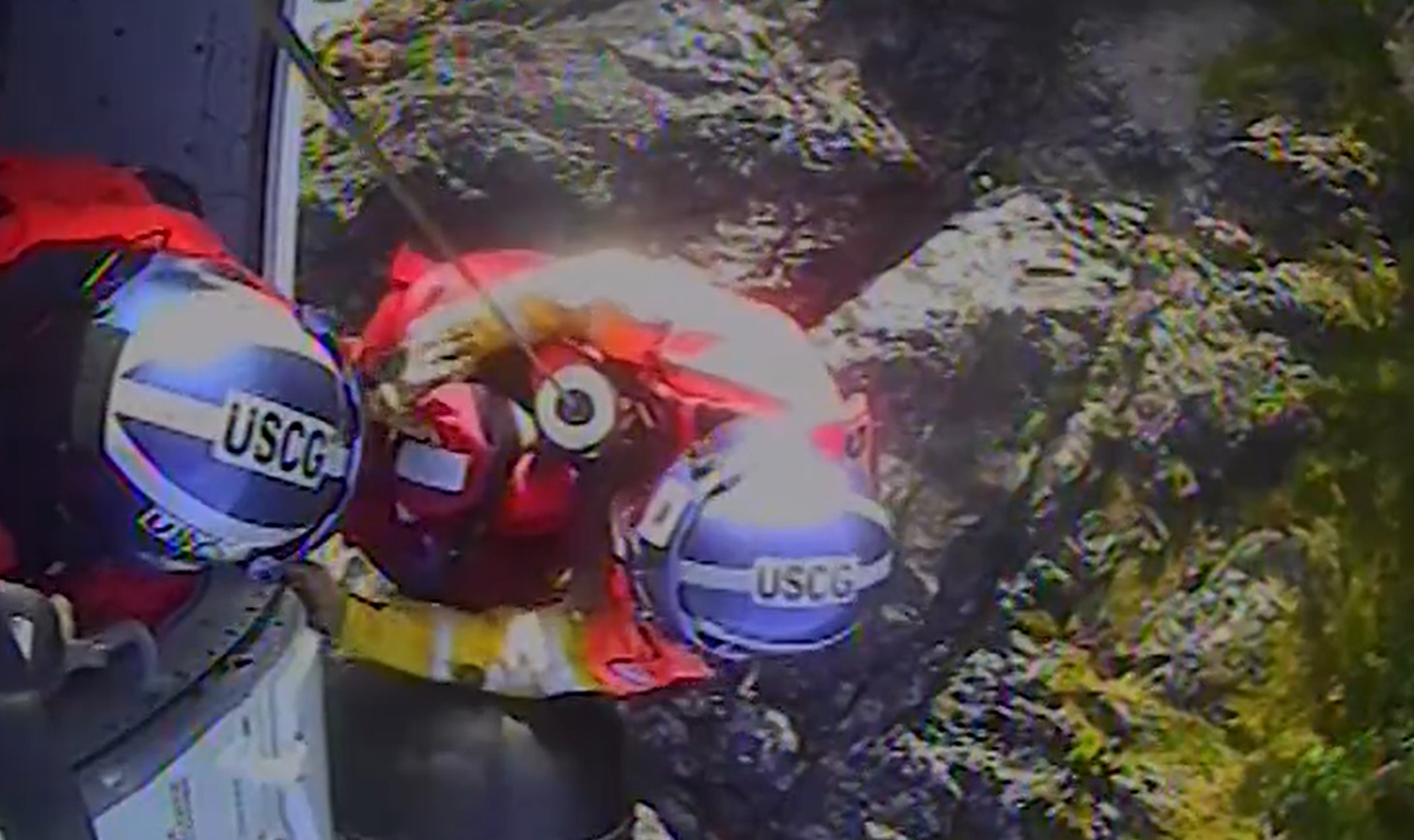
Sitka-300x229A U.S. Coast Guard MH-60 Jayhawk helicopter crew from Air Station Sitka crashed during a training flight near Harbor Mountain in Sitka, Alaska, on Monday, June 22nd, 2026. All four crew members aboard survived.

Watchstanders at the Arctic District command center received the initial report of the crash through the activation of the aircrew’s personal locator beacon at approximately 10:07 a.m. Sitka Fire and Rescue arrived on scene at approximately 11:00 a.m. and transported all four crew members to Mt. Edgecumbe Medical Center.

“We are incredibly relieved our crew members survived with only minor injuries,” said Rear Adm. Bob Little, commander of the Coast Guard’s Arctic District. “We are grateful for the swift response by the Sitka Fire and Rescue who assisted us during this critical time.”

Published on:

Coast_Guard_Georgia-300x225A crewmember aboard a commercial fishing vessel was medically evacuated on Friday, June 12th, 2026, after becoming ill while fishing 92 miles offshore Brunswick, Georgia.

The operator of the 44-foot F/V STILL FISHING contacted U.S. Coast Guard Sector Charleston’s command center to report that a 56-year-old male crewmember was experiencing gastrointestinal symptoms. Watchstanders consulted with the duty flight surgeon, who recommended a medical evacuation.

Because of the vessel’s distance from shore, watchstanders launched an MH-60 Jayhawk helicopter crew from Air Station Clearwater to conduct the medevac. The crew located the vessel, hoisted the man aboard, and transported him to St. Simons Island Airport in Georgia, where emergency medical services took over his care.

Published on:

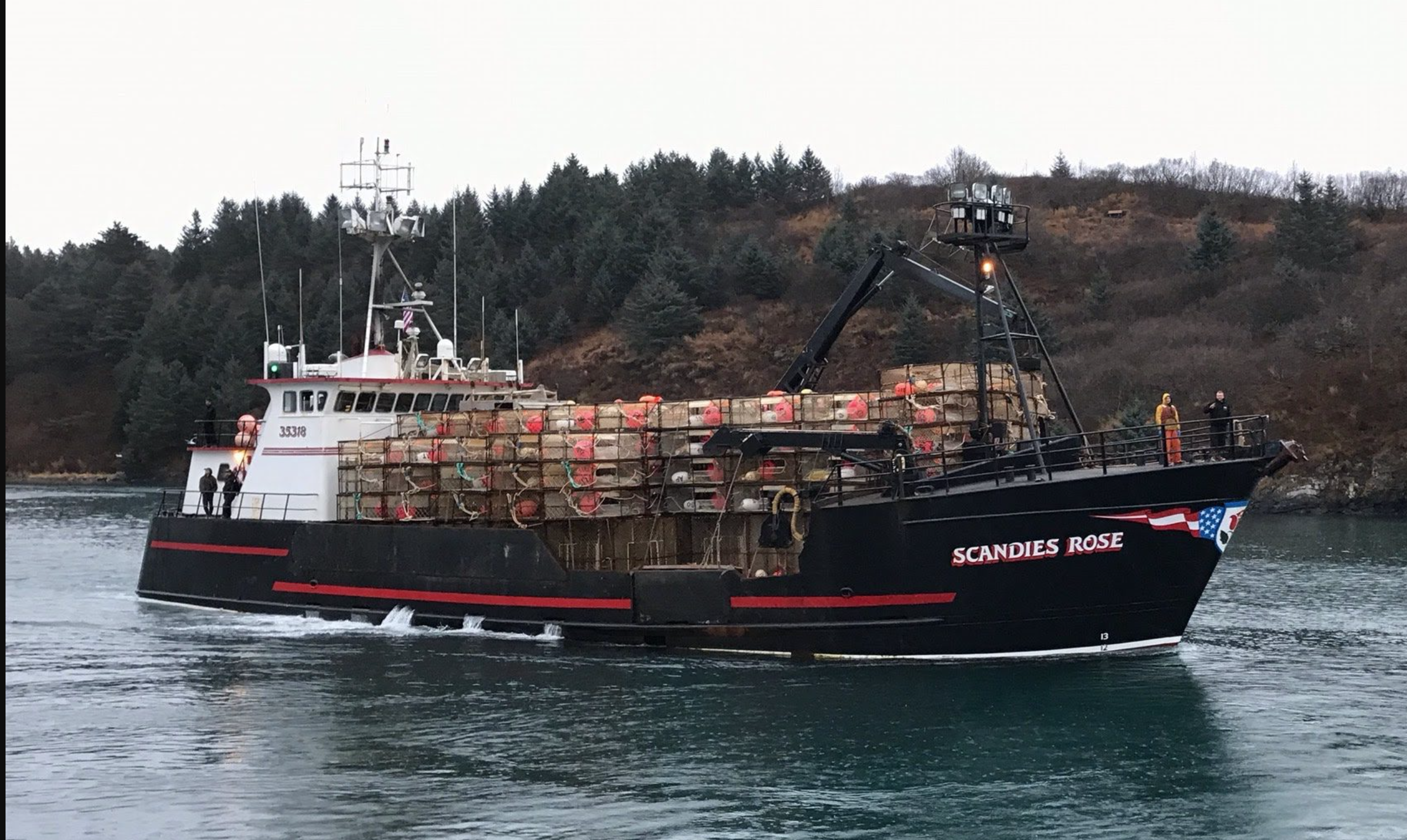
Arctic-Sea-300x181The F/V ARCTIC SEA ran aground on St. George Island in the Pribilofs on January 5th, 2026, and Alaska environmental officials have confirmed that roughly 45,000 gallons of diesel fuel has been released into the ocean. It has been found that five months after the grounding, fuel was still seeping from the vessel.

The F/V ARCTIC SEA was a 134-foot crab boat working through a gale force storm when it lost power. The vessel was caught off the northern shore with no propulsion, facing 50-knot winds and 10-foot seas. It ran aground and began taking on water. The U.S. Coast Guard responded swiftly and rescued all nine crew members, then took them safely to St. Paul, where emergency medical personnel were waiting.

A June 1st, 2026, inspection by Global Diving & Salvage, conducted for a pollution survey, found that the starboard double-bottom tank still held 5,821 gallons of diesel, nearly six thousand gallons sitting in a single breached tank six months after the incident. According to the Alaska Department of Environmental Conservation (DEC) report from June 9, 2026, the team from Global Diving & Salvage stopped further leakage from that tank by plugging its vent and standpipe.

Published on:

Fishing_Vessel-300x202Alaska’s seafood industry is one of the world’s most productive fisheries, and one of the most economically important in the nation. A new report released in May puts some numbers in perspective, and they’re worth understanding if you work on the water in Alaska.

The 2026 Economic Value of Alaska’s Seafood Industry report, produced by McKinley Research Group for the Alaska Seafood Marketing Institute (ASMI), uses data from the 2023 and 2024 fisheries. The industry contributed $5.2 billion in total economic value from harvest, processing, and distribution. Alaska fishermen harvested an average of 5.1 billion pounds of seafood valued at $1.5 billion at the dock. Processors turned that raw harvest into 2.4 billion pounds of finished product worth $4.2 billion, adding $2.7 billion in value before the product ever left the state.

The workforce behind those numbers is substantial. The industry directly employed 41,800 people, including more than 15,000 Alaskans from over 120 communities statewide. Total labor income generated by the seafood sector reached $1.9 billion.

Published on:

Man-Taking-Photo-300x200You already know that you work in one of the most dangerous industries in the world. When something goes wrong, the decisions you make in the first hours and days after an injury can determine whether you receive the full compensation you are entitled to or whether you walk away with far less than you deserve.

Maritime law and the Jones Act exist to protect you. Here is how to protect yourself.

  1. Report any Accident Immediately
Published on:

Chinook-Salmon-300x225For commercial fishermen in Alaska’s Gulf waters, a recent federal decision provides clearer regulatory guidance as the season begins. In May 2026, NOAA Fisheries completed a 12-month review of Gulf of Alaska Chinook salmon and concluded that listing any of the three identified population groups under the Endangered Species Act (ESA) is not warranted at this time.

The review was triggered by a January 2024 petition from the Wild Fish Conservancy, which asked NOAA to evaluate whether one or more distinct groups of Gulf of Alaska Chinook should be listed as threatened or endangered. After a preliminary finding in May 2024 indicated the question deserved a closer look, NOAA assembled a review team, worked with Alaska Department of Fish and Game biologists, and consulted with Alaska Native Tribes and corporations throughout the Gulf region.

NOAA’s review identified three distinct Evolutionarily Significant Units (ESUs), the scientific term for essentially distinct, self-sustaining salmon populations within the Gulf of Alaska:

Published on:

FishProcessor-e1778629069716-300x171If you work as a fish processor aboard a factory trawler or catcher-processor vessel, you may not think of yourself as a seaman. You spend your shifts below deck, gutting, filleting, and freezing fish, not steering the vessel or hauling gear. However, under federal maritime law, your job title does not determine your legal rights, where you work does.

Fish processors who work aboard vessels actively operating at sea qualify as seamen under the Jones Act. That distinction matters enormously when something goes wrong.

The line that separates Jones Act protection from state workers’ compensation coverage comes down to one question: were you working on a vessel in navigation when you were injured?

Published on:

PFD2-300x169Commercial fishing remains one of the most dangerous occupations in the United States. Between 2000 and 2019, 878 commercial fishermen died from traumatic injuries on the job, an average of more than 43 deaths per year. Vessel disasters are the leading cause of death however falls overboard are second, accounting for 266 of those deaths, or 30% of all fatalities.

Of all 266 workers who died after falling overboard between 2000 and 2019, not one was wearing a Personal Flotation Device (PFD).

Why Fishermen Don’t Wear PFDs And Why That Has to Change

Published on:

Mariana-300x166On Wednesday, April 15, 2026, watchstanders at the Joint Rescue Coordination Center Honolulu received a report from the vessel manager of the M/V MARIANA, a 145-foot U.S. registered dry cargo ship that regularly transports goods between Guam, Tinian, and Saipan. The vessel’s starboard engine was disabled while carrying six people, leaving it stranded approximately 140 miles north-northwest of Saipan. The crew reported the disabled engine just as Typhoon Sinlaku approached the region.

The U.S. Coast Guard established an hourly communication schedule with the M/V MARIANA through the vessel’s manager. On Wednesday evening, communications went silent, and contact was never reestablished.

On Thursday morning, a U.S. Coast Guard Air Station Barbers Point HC-130 Hercules airplane crew launched from Guam to search for the vessel but were forced to return to Guam due to heavy winds in the search area. That same day, Super Typhoon Sinlaku made landfall on the island of Tinian with sustained winds of 145 mph and torrential rain. The storm pummeled the region for roughly 48 hours. On Saipan, it triggered flooding, tore roofs from buildings, and overturned vehicles. More than 15,000 residents lost power. The Northern Marianas government requested an expedited federal disaster declaration.

Published on:

Ketchican-300x154This week it has been reported that Silver Bay Seafoods is trying to acquire Northline Seafoods, one of its competitors in Alaska’s salmon processing industry. It was also reported that Northline CEO and co-founder Ben Blakey resigned on April 15th, 2026, during the acquisition process. For anyone working the Alaska salmon fishery, this is a news story worth following.

Silver Bay Seafoods has experience with acquisitions. The Sitka-based company, owned by a cooperative of roughly 600 fishermen, has rapidly expanded its footprint across Alaska’s seafood processing sector. In 2024, the company acquired Trident Seafoods’ Ketchikan and False Pass facilities. This expansion continued into March 2025, when Silver Bay purchased Cooke subsidiary Icicle Seafoods’ 50% stake in OBI Seafoods. The agreement, established in collaboration with BBEDC, brought eight significant processing facilities into their network. These plants are located in Petersburg, Seward, Kodiak, Larsen Bay, Egegik, Wood River, Cordova, and Naknek. Silver Bay also took over Peter Pan Seafoods’ Valdez operations and other key assets following Peter Pan’s high-profile bankruptcy.

Industry experts point out that if Northline is acquired, only three companies will dominate Alaska’s salmon processing industry. Such a level of consolidation has not been seen in recent years.

Contact Information