Articles Posted in Alaska

Published on:

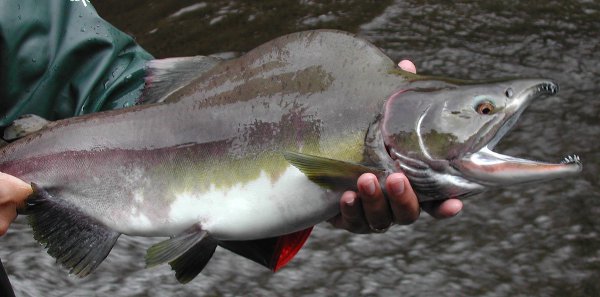
Ketchican-300x154This week it has been reported that Silver Bay Seafoods is trying to acquire Northline Seafoods, one of its competitors in Alaska’s salmon processing industry. It was also reported that Northline CEO and co-founder Ben Blakey resigned on April 15th, 2026, during the acquisition process. For anyone working the Alaska salmon fishery, this is a news story worth following.

Silver Bay Seafoods has experience with acquisitions. The Sitka-based company, owned by a cooperative of roughly 600 fishermen, has rapidly expanded its footprint across Alaska’s seafood processing sector. In 2024, the company acquired Trident Seafoods’ Ketchikan and False Pass facilities. This expansion continued into March 2025, when Silver Bay purchased Cooke subsidiary Icicle Seafoods’ 50% stake in OBI Seafoods. The agreement, established in collaboration with BBEDC, brought eight significant processing facilities into their network. These plants are located in Petersburg, Seward, Kodiak, Larsen Bay, Egegik, Wood River, Cordova, and Naknek. Silver Bay also took over Peter Pan Seafoods’ Valdez operations and other key assets following Peter Pan’s high-profile bankruptcy.

Industry experts point out that if Northline is acquired, only three companies will dominate Alaska’s salmon processing industry. Such a level of consolidation has not been seen in recent years.

Published on:

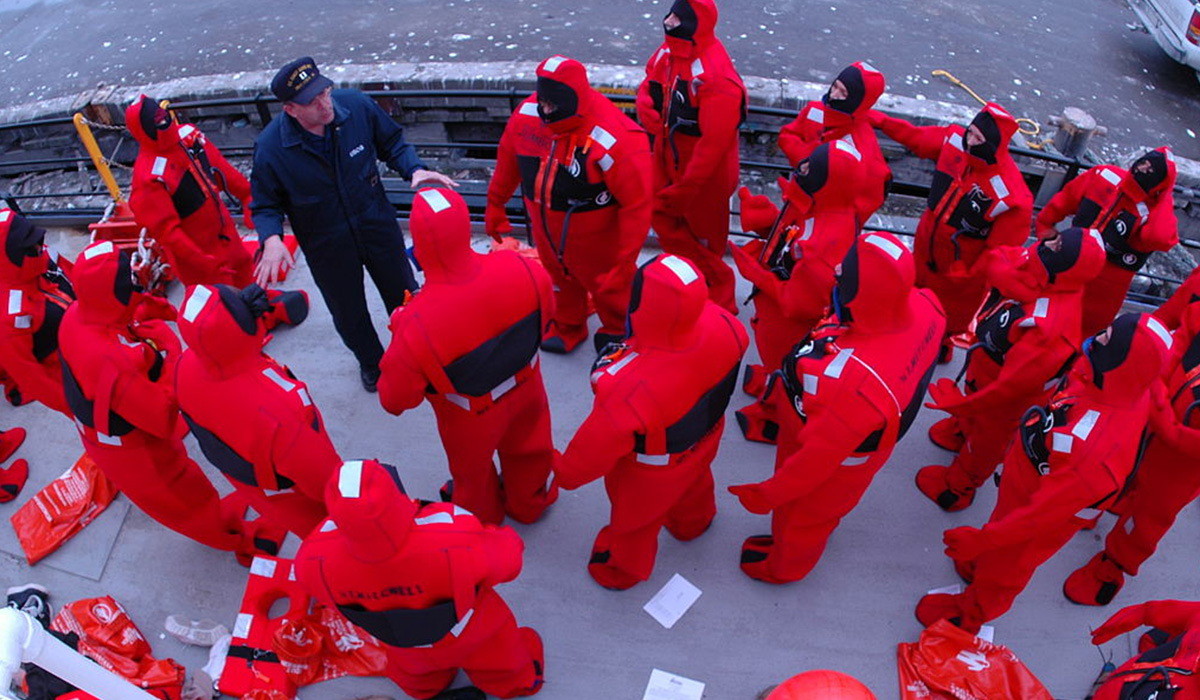
image005-300x209Earlier this year, we reported about how proposed cuts to the National Oceanic and Atmospheric Administration (NOAA) and the National Weather Service were putting commercial fishermen in Alaska, Washington, and Oregon at greater risk by degrading marine weather forecasts. That threat has not gone away, and now a new federal budget proposal makes clear that it is deepening. This time, the target is not just forecasting. It is the safety training programs that have quietly kept Pacific Northwest and Alaska fishermen alive for decades.

The proposed federal fiscal year 2027 budget calls for a $1.6 billion cut to NOAA’s overall budget, a 32 percent reduction that would eliminate entire programs. Congress rejected an identical proposal for FY2026, but the proposed cuts keep coming. The agency has experienced significant staffing reductions due to recent layoffs and attrition. Alaska fishermen reported greater uncertainty about storm forecasts during the 2025 season, and the conditions driving that uncertainty have not improved.

What is different this year is that the scope of that threat has expanded. The proposed cuts are not limited to weather forecasting offices and buoy networks. They also target the federal programs that fund commercial fishing safety training, specifically the Commercial Fishing Safety Research and Training program and the National Institute for Occupational Safety and Health (NIOSH) fishing industry programs.

Published on:

Wheel-300x150The official cause of death has been released for Todd Meadows, the deckhand who died February 25, 2026, after falling overboard from the F/V ALEUTIAN LADY during filming of Deadliest Catch Season 22. Todd Meadows cause of death was reported as drowning with probable hypothermia and submersion in cold water. The Alaska Department of Health has ruled the incident an accident.

The F/V ALEUTIAN LADY is one of the vessels featured on the long running reality series. Meadows had joined the crew in May 2025 and had not yet appeared on air at the time of his death. Captain Rick Shelford announced the loss on social media, calling it “the most tragic day in the history of the Aleutian Lady on the Bering Sea.” He remembered Meadows as someone whose enthusiasm and strong work ethic made him family almost immediately.

Meadows was from Montesano, Washington, and leaves behind three young sons. A GoFundMe established in his memory has raised more than $60,000.

Published on:

Ocean-Bay-Rescue-300x195On April 2, 2026, the 58-foot F/V OCEAN BAY ran aground on Umnak Island’s northern shore in the Aleutians. At 4:45 a.m., the U.S. Coast Guard Arctic District Command Center in Juneau received a report that the vessel was taking on water. Watchstanders immediately coordinated a multi-asset response, dispatching an MH-60 Jayhawk helicopter crew and an HC-130 Hercules airplane crew from U.S. Coast Guard Air Station Kodiak and diverted the Cutter WAESCHE to the scene.

A Good Samaritan vessel, F/T SEAFREEZE ALASKA, a 295-foot factory trawler, was first to arrive on the scene at approximately 5 a.m. The Hercules crew and WAESCHE reached the area about three hours later. By that time, the crew of the F/V OCEAN BAY had successfully stopped the flooding and dewatered the vessel.

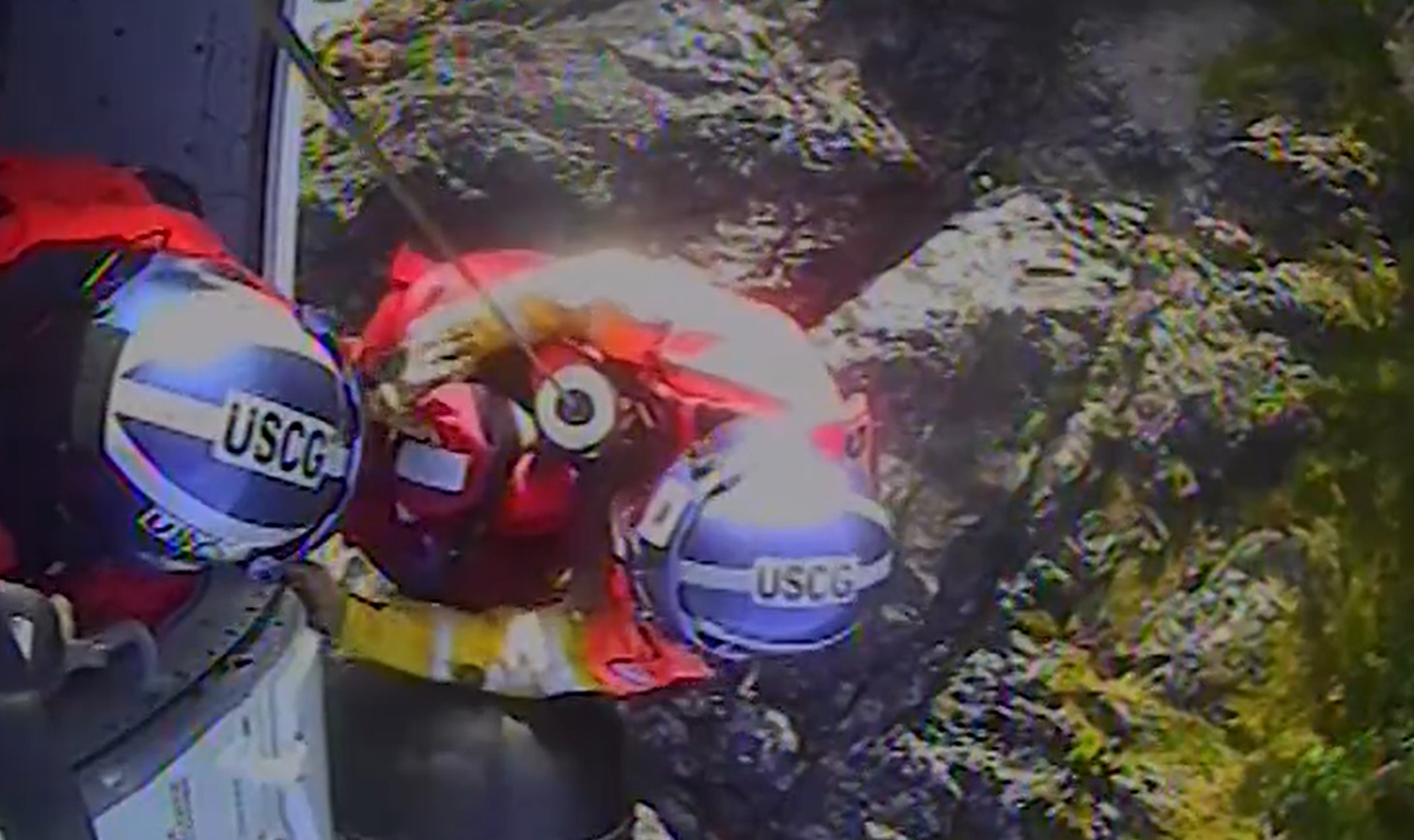
The Jayhawk aircrew arrived at approximately 11:15 a.m. and hoisted all five crew members to safety, transporting them to Dutch Harbor for medical evaluation. Resolve Marine has been contracted to oversee salvage operations on the grounded vessel.

Published on:

Wheel-300x150It is with great sadness that we report the deaths of two maritime workers following a fatal confined space incident aboard the freight barge WAYNEHOE, moored approximately 25 miles northwest of Ketchikan, Alaska, near Skowl Arm on Prince of Wales Island.

According to the U.S. Coast Guard, watchstanders at Coast Guard Sector Southeast Alaska in Juneau received a mayday call at 9:14 a.m. on Sunday reporting that the crew of the tug vessel CHUKCHI SEA had lost contact with four crewmembers inside a confined space aboard the barge. The tug and barge are owned by Hamilton Marine Construction, a Bellingham, Washington-based company.

The U.S. Coast Guard directed the launch of a 45-foot Response Boat-Medium crew from Coast Guard Station Ketchikan, with members of the South Tongass Volunteer Fire Department aboard, to respond to the incident. While en route, the crew of the CHUKCHI SEA recovered one deceased crewmember and assisted two survivors out of the confined space.

Published on:

Ocean_Waves-300x173Last week, the commercial fishing community experienced a significant loss with the passing of one of its members, affecting people well beyond the industry itself.

Todd Morgan Meadows, 25, a deckhand aboard the F/V ALEUTIAN LADY and a familiar face to fans of Deadliest Catch, passed away on February 25, 2026, in Alaskan waters. He was a son, a brother, a crewmate, and most importantly, a devoted father to three young boys.

Captain Rick Shelford announced the tragic news on Facebook.

Published on:

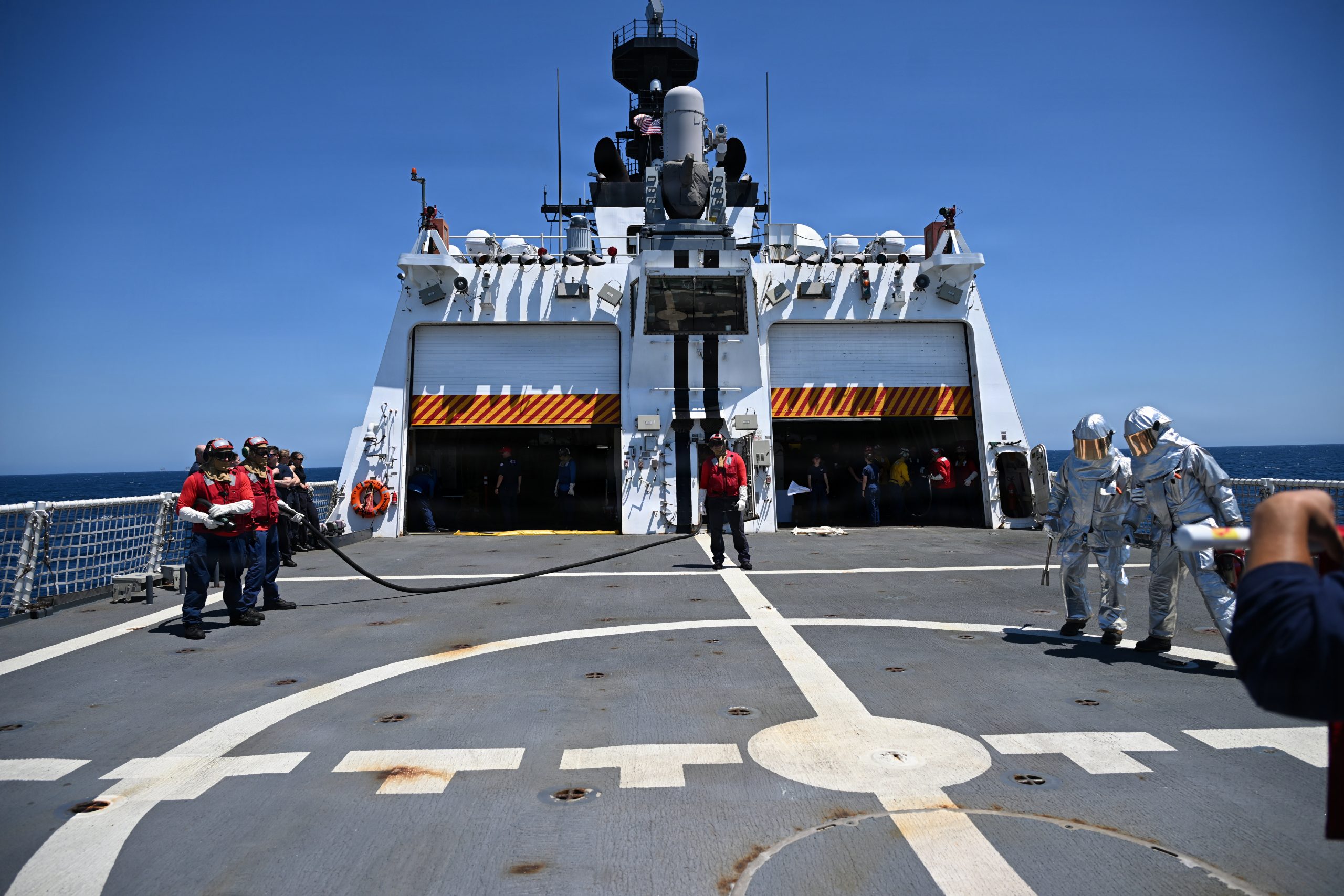
FrederickMann-300x200The USCGC FREDERICK MANN is the sixth Fast Response Cutter (FRC) assigned to the Arctic District and the third for Kodiak. These aren’t ceremonial vessels, they are crucial for conducting search and rescue operations when fishing vessels are in distress, patrol fisheries to protect one of the nation’s most valuable natural resources, and defend the maritime borders.

Alaska’s coastline is longer than the entire rest of the United States combined. However, for decades the U.S. Coast Guard has relied on aging patrol boats built in the 1980s to cover this area. The new generation of FRCs represents a significant upgrade. These new vessels are equipped with advanced surveillance and communications systems and capable of deploying smaller boats over the horizon to reach vessels in distress or under suspicion.

The USCGC FREDERICK MANN will be incorporated into the U.S. Coast Guard during a significant period of modernization. After the commissioning of the USCGC STORIS (the service’s first new polar icebreaker in more than 25 years) the Arctic District is also set to receive two additional Offshore Patrol Cutters soon. For a region where climate change is opening new shipping lanes and creating new security challenges, this is an important addition.

Published on:

FV-Quantum-300x225The U.S. Coast Guard rescued two fishermen Wednesday morning after their vessel ran aground on rocks near Pasagshak Bay, approximately two miles offshore from Kodiak Island.

The 41-foot F/V QUANTUM, based out of Homer, struck rocks surrounding a small island near Ugak and Pasagshak Bays around 7:08 a.m. on January 21, 2026. The crew immediately reported they were taking on water and issued an SOS to the U.S. Coast Guard Sector Western Alaska and U.S. Arctic command center.

Watchstanders quickly issued an Urgent Marine Information Broadcast, and nearby good Samaritan vessels confirmed that both crewmembers were wearing survival suits, a decision that officials say may have been critical to their safety.

Published on:

Arctic-Sea-300x181On Monday, January 5th, 2026, nine fishermen spent more than seven hours stranded on their vessel near St. George Island during hurricane force winds. The individuals were subsequently rescued by the U.S. Coast Guard.

The F/V ARCTIC SEA ran aground near the remote island of St. George, located 750 miles southwest of Anchorage, in conditions that made rescue treacherous. Winds were up to 50 knots with 10-foot seas when the U.S. Coast Guard’s Juneau command center received the distress call at 4:11 a.m.

A nearby fishing vessel, the F/V NORTH SEA, reached the scene first but couldn’t attempt a rescue in the extreme weather. Instead, the crew provided real-time updates to U.S. Coast Guard watchstanders coordinating the response.

Published on:

Great_Pacific-300x143On October 27, 2025, the F/V GREAT PACIFIC, a 134-foot U.S. fishing trawler carrying five crew members, lost power approximately 100 miles south of Yakutat, Alaska. The vessel suffered a broken drive shaft, leaving it dead in the water and adrift in rough 30-foot seas.

The crew contacted the U.S. Coast Guard, which dispatched the USCGC JOHN WITHERSPOON to assist. On October 29th, the U.S. Coast Guard cutter successfully took the disabled fishing vessel in tow. However, as the USCGC JOHN WITHERSPOON towed the F/V GREAT PACIFIC near Kayak Island, the Coast Guard cutter itself suffered a main engine failure. Unable to maintain the tow, the cutter was forced to release the tow line, leaving the F/V GREAT PACIFIC unmanned and adrift in the Gulf of Alaska.

All five crew members were evacuated by the U.S. Coast Guard, but the F/V GREAT PACIFIC drifted without anyone aboard for five days across the Gulf of Alaska. During this period, the Marine Exchange of Alaska operations center in Juneau monitored the vessel’s movements closely, tracking its position and alerting other ships around the drifting vessel.

Contact Information